Waverley Brownall

Our philosophy is dominated by quality.

  • Home
  • Tube Fittings
    • Ringlok Fittings
    • Duoloc Fittings
    • Stainless Steel Tube
    • Gas Release Flaps
    • Flange Fittings
  • Ball Valves
    • BV 1000 Series Ball Valves
    • 3 Way Ball Valves
    • BV 3000, 6000 Ball Valves
    • PSV8 Ball Valves & Needle Valves
    • Lockable Handle Ball Valves
    • Air Actuated Ball Valves
    • Cast 316 Ball Valves
  • Valves
    • Stainless Steel Needle Valves
    • Check Valves
    • Relief Valves
    • Strainers
    • Manifold Valves
    • Double Block & Bleed Valves
  • Pipe Fittings
    • Hose Components & Unions
    • Plugs, Bushes & Seals
    • High Pressure Precision Pipe Fittings
    • Low Pressure Cast Range of Pipe Fittings
  • Special Metals
    • Titanium
    • 6 Mo Stainless Steel
    • Monel 400
    • Inconel 625
    • Incoloy 825
    • Hastelloy C-276
  • Catalogues
  • About
    • Blog
    • Bespoke Solutions
    • Approvals
    • Case Studies
    • Quality
    • Support
    • Terms & Conditions
  • Contact Us

October 27, 2016 By Waverley Brownall

Duplex Stainless Steel Properties

Duplex Stainless Steel Properties
    • High strength
    • High corrosion resistance
    • Microstructure of roughly 50% austenite and 50% ferrite
    • Applications of Duplex include: Chemical Process, Petrochemical, Oil and Gas, Pharmaceutical, Sea Water, LNG, Nuclear Power,  Solar Power and more

Duplex Stainless Steel

Types of stainless steel, covering the majority of grades available, can be put into 5 categories.

Category Description
Ferritic Contain less than 0.10% carbon and are magnetic.
Austenitic Most common type of stainless steel. Austenitic counts for over 70% of all steels on the market.
Martenistic Shares some characteristics with ferritic but can have higher level of carbon up to 1%. Used where strength is more important than corrosion resistance.
Duplex A combination of ferritic and austenitic steels.

Precipitation Hardening – “With the addition of elements such as Aluminium, Copper and Niobium, these steels become extremely strong.” – What Is Stainless Steel? By Brown Mac

The Balance Of Austenite And Ferrite

Below is a comparison of two familiar steels Austenite 304 and Ferritic 430. The important elements in stainless steels can be classified into these two subsections. Each element favours either one structure or the other.

Structure Grade EN No. C Si Mn P S N Cr Ni Mo
Ferritic 430 1.4016 0.08 1.00 1.00 0.040 0.015 – 16.0/18.0 – –

Austenite

304 1.4301 0.07 1.00 2.00 0.045 0.015 0.11 17.5/19.5 8.0/10.5 –

Ferritisers – Cr, Si, Mo, W, Ti and Nb

Austenitisers – C, Ni, Mn, N, Cu

As you can see from the examples above, grade 304 has predominance of ferritisers and so it is ferritic in structure.

Corrosion Resistance Of Duplex Steels

  • Higher general strength than other steel grades
  • Easy to weld
  • Structural toughness at a lower temperature range
  • High resistance to stress-corrosion cracking
SEND AN ENQUIRY

Ask us about Duplex stainless steel today. We have been specialising in the use of special alloys for tube fittings, pipe fittings and valves for over 40 years.


Filed Under: Uncategorized Tagged With: duplex alloy, duplex stainless, duplex stainless steel, duplex steel, special alloys, special metals, super duplex stainless steel

October 20, 2016 By Waverley Brownall

5 Common Types Of Corrosion

5 Common Types Of Corrosion

Common types of corrosion that are seen within industrial, marine/offshore and oil and gas include 5 main categories. These are what we will cover in this blog post, including suggestions on how to prevent it.

Metals that are attacked by corrosive substances are open to damage that can effect the durability and safety of the alloy. This is a huge concern for sectors of industry with environmental considerations. For example, within the marine and offshore industries, engineers will require metals that can withstand exposure to seawater.

Common Types Of Corrosion

1. Galvanic Corrosion

Galvanic corrosion will occur when two separate metals/alloys are in contact with each other. This type of corrosion will occur when

a) When metals are electrochemically dissimilar

b) Metals are in electrical contact

c) Metals are exposed to electrolyte

2. Uniform Corrosion

Irons and steels will corrode in ‘uniform’ when  exposed to certain environments such as soils and natural waters. Rust will appear in the presence of uniform corrosion.

3. Pitting Corrosion

Spots and pits will appear on the metal with this type of corrosion. It is a type of localised corrosion, which means that the attack is accelerated due to exposure of an area on the metal that an otherwise protective coating or layer has broken down.

4. Stress Corrosion Cracking

Unexpected sudden failure can occur with this type of corrosion. Attack of an alloys tensile strengths at high temperatures is a common situation for stress-corrosion cracking.

aqueous corrosion

5. Aqueous Corrosion

“Aqueous corrosion is an electrochemical reaction of materials due to a wet environment, resulting in the deterioration of the material and its vital properties.” – What Is Aqueous Corrosion by Corrosionpedia.com

Corrosion Prevention

There are various ways to prevent the effects of corrosion. Each type of corrosion will differ in the prevention method.

However, generally, the selection of the correct corrosion resistant metal to begin with can prevent needing further treatments and prevention methods.

some prevention methods that need consistent updating and maintenance can be a hassle – both economically and practically.  An investment of a high-performance alloy will save much of this hassle. 

It is very important to note that each corrosion resistant metal has its own properties and composition that will cope with some types of corrosion better than another.

This is why the selection of the right material is vital for cost, availability and most importantly – safety.

Material Selection And Advice

Corrosion Problem Solution
Galvanic Corrosion Avoid mixing fittings and valves wherever possible
Uniform Corrosion Limit or prevent this by an appropriate choice of alloy
Pitting Corrosion High resistance to pitting will be a crucial consideration point for any alloy
Stress Corrosion Cracking Avoid surface machining stresses. Stress cracking resistance needed.
Aqueous Corrosion Metals with fantastic seawater resistance Eg. Inconel 625

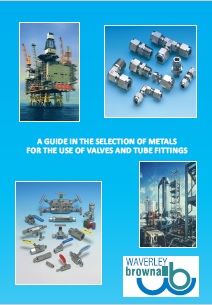
Please apply for our FREE A5 Guide in the Selection Of Special Metals For Tube Fittings and Valves

GET MY GUIDE

Free guide posted to your business address

Includes:
– Corrosion Resistance Charts
-Availability and Costing
-Delivery and Manufacture
-Material properties
Monel 400, Incoloy, Inconel, Hastelloy and more

More Information:

Special Metals

Eight Forms Of Corrosion list by CorrosionDoctors.org

Types Of Corrosion by Merinox

Filed Under: Uncategorized Tagged With: common types of corrosion, corrosion, corrosion control methods, corrosion of alloys, corrosion of metals, corrosion prevention, Corrosion Prevention Material Selection, exotic alloys, Material Selection For Corrosion Prevention, special alloys, special metals

August 23, 2016 By Waverley Brownall

Inconel 625 Characteristics And Applications

Inconel 625 Characteristics And Applications

Inconel 625

Inconel 625 is an alloy with fantastic corrosion resistance, with stress-cracking and pitting resistance properties.

The properties of Inconel 625 make it an excellent choice for sea-water applications in the Marine or Subsea industries.

Characteristics Of Alloy 625

  • Fantastic resistance to pitting
  • Resistance to crevice corrosion cracking
  • Properties that can withstand low and high temperatures
  • High tensile strength
  • Almost complete protection against chloride induced stress cracking
  • Good high temperature strength
  • High resistance to oxidation at high temperatures

Get a quote for our Inconel 625 alloy tube, pipe fittings and valves today:

Get A Quote

Applications of Inconel 625

  • Marine Industry
  • Subsea applications such as submarine fittings
  • Aerospace and Jet Engines
  • Chemical and Food processing equipment
  • Filtration and waste water disposal or tanks

In mild environments: For fresh and seawater applications with neutral salts and alkaline media there is almost no attack present with use of alloy 625.

In severe environments: In corrosive environments that are challenging to other alloys, Inconel 625 is able to supply resistance to oxidising chemicals because of the combination of nickel and chromium within the metal.

High nickel concentration and molybdenum provides high resistance to non-oxidising environments.

The Ultimate Solution For Corrosive Environments

Our highly corrosion resistant Inconel 625 fittings and valves are manufactured in the UK and exported worldwide.
We supply many industries that require the fantastic properties of Inconel 625 for a number of applications.

Get A Quote
  • Fast UK and Internationally delivery
  • Standard product and bespoke solutions
  • 5 Star Customer Services

Inconel 625 products such as ball valves, couplings, elbows and adaptors are available as part of our special metals range.

Filed Under: Uncategorized Tagged With: Inconel 625, inconel 625 alloy, inconel 625 applications, inconel 625 characteristics, inconel 625 pipe fittings, inconel 625 properties, inconel 625 tube fittings, inconel 625 uses, special alloys, special metals

  • « Previous Page
  • 1
  • 2
  • 3
  • 4
  • 5
  • Next Page »
  • Duoloc Imperial & Metric Charts
  • Ringlok Imperial & Metric Charts

Call us or email us on:
+44(0)1702 600014
enquiries@waverleybrownall.co.uk

Additional Links

  • Approvals
  • Catalogues
  • Case Studies
  • Quality
  • Support

Copyright © 2026 · ·Generate Pro Theme on Genesis Framework · WordPress · Log in

We use cookies to ensure that we give you the best experience on our website. If you continue to use this site we will assume that you are happy with it.