Waverley Brownall

Our philosophy is dominated by quality.

  • Home
  • Tube Fittings
    • Ringlok Fittings
    • Duoloc Fittings
    • Stainless Steel Tube
    • Gas Release Flaps
    • Flange Fittings
  • Ball Valves
    • BV 1000 Series Ball Valves
    • 3 Way Ball Valves
    • BV 3000, 6000 Ball Valves
    • PSV8 Ball Valves & Needle Valves
    • Lockable Handle Ball Valves
    • Air Actuated Ball Valves
    • Cast 316 Ball Valves
  • Valves
    • Stainless Steel Needle Valves
    • Check Valves
    • Relief Valves
    • Strainers
    • Manifold Valves
    • Double Block & Bleed Valves
  • Pipe Fittings
    • Hose Components & Unions
    • Plugs, Bushes & Seals
    • High Pressure Precision Pipe Fittings
    • Low Pressure Cast Range of Pipe Fittings
  • Special Metals
    • Titanium
    • 6 Mo Stainless Steel
    • Monel 400
    • Inconel 625
    • Incoloy 825
    • Hastelloy C-276
  • Catalogues
  • About
    • Blog
    • Bespoke Solutions
    • Approvals
    • Case Studies
    • Quality
    • Support
    • Terms & Conditions
  • Contact Us

November 27, 2017 By Waverley Brownall

Introducing the Incoloy Family

Introducing the Incoloy Family

You may have heard Sister Sledge’s ‘We Are Family’, in which she sings merrily, “We are family, I got all my sisters with me.” Well, a family of super alloys isn’t all that different.

INCOLOY® is one family that certainly has all of its sisters with it – and brothers! From the 800 series, to 925X, Incoloy provides fantastic benefits for wide-ranging engineering applications. Invented for specific uses with highly corrosive acids and alkali, this one family that definitely won’t let you down.

The INCOLOY® range of super alloys is produced by Special Metals Corporation. This ‘family’ of alloys are known for their high corrosion resistances and capabilities at high temperatures.

We manufacture our entire range of pipe fittings and control valves in Incoloy which is perfect for use in process piping, heat treatment, oil and gas piping and acid production. Incoloy 825 is a steady favourite for its resistance to pitting, localised corrosion and reducing or oxidising acids.

Why Should I Use ‘INCOLOY’?

Incoloy are a range of alloys that provide fantastic results within many extreme environments. For industrial use, such as processing plants, an alloy like this becomes essential.

When aspects of safety, maintenance and efficiency are at play, only the best alloys are chosen. Due to its high resistances, strength and general quality, 825 and similar alloys are by far a great choice for longevity on an industrial scale.

As a favourite within the Oil and Gas industry, this material is able to cope with diverse conditions such as;

  • The separation of corrosive fluids
  • Processing liquefied natural gas
  • Flow lines in subsea walls
  • Tubing for fluid conveyance

Note: One of the most prominent characteristics of the Incoloy range is their ease of fabrication.

INCOLOY® Range Of Alloys

You’re not short for choice, here’s the full list of the INCOLOY family:

  • INCOLOY 800’s
    800, 800H, 800HT, 801, 802, 803, 825, 890 and DS Incoloy alloy 330
  • INCOLOY 028, 020
  • INCOLOY alloy HX and alloy 864
  • INCOLOY alloy 925
  • INCOLOY alloy 945
  • INCOLOY alloy 945X
  • INCOLOY alloy 25-6M0 and 25-6HN
  • INCOLOY alloy 27-7M0

A closely related family are other nickel-alloys such as INCONEL, particularly the 600’s into 700 ranges. These alloys hold similar properties but it’s important to remember that their uses can be vast and distinctive.

Machinability Of Incoloy

Incoloy are known as a category ‘C’ alloy, which is considered reasonably easy to machine. However, it’s important to take into the account the context which individual material type and machining processes are in place.

In general, nickel alloys require fundamental understanding of machinery type, to the correct tooling, to traditional instruction vs. advancements. Group ‘C’ have similar mechanical properties to austenitic stainless steels except for higher temperature strengths.

Type ‘C’ alloys are typically machined in the cold-drawn and/or stress relieved conditions. These alloys include 802, 825 and 800HT. The basic principles to be understood are; work hardening, choice of tooling, lubricants and coolants and finally, turning/boring and grooving.

Pipe fittings, twin and single ferrule compression fittings and valves are available in Incoloy 825 material as standard from Waverley Brownall. Other materials from the Incoloy or Inconel family are considered on request for specialised requirements.

Helpful links:

  • What is the difference between Inconel and Incoloy? – Continental Steel
  • Incoloy – Wikipedia
  • Incoloy 825 (Waverley Brownall Special Metals)
Filed Under: Uncategorized Tagged With: alloy 825, incoloy, incoloy 825, incoloy 825 alloy, special metals, special metals corporation

November 22, 2017 By Waverley Brownall

Monel 400 Tube Fittings And Valves: Properties And Uses

Monel 400 Tube Fittings And Valves: Properties And Uses

Monel 400 tube fittings and valves are available from our manufacturing facility in Essex.

The Monel Alloy 400 is a nickel and copper allow that offers great properties such as steam and water resistance.

At the same time, this alloy is resistant to caustic and salt solutions which is very helpful for a wide range of industries.

Properties Of Monel 400

What makes Monel Alloy 400 special is the fact that it’s a solid solution that can be hardened only by cold working. The alloy on its own also offers some great features such as a very good strength, weldability that is very good as well as a stellar corrosion resistance.

Moreover, this alloy is particularly good when it comes to resisting to hydrofluoric and hydrochloric acids. Since it has a large amount of copper can be found in this product, you will see that the compound does get attacked with ease by ammonia systems and nitric acids so you have to treat it with extra care.

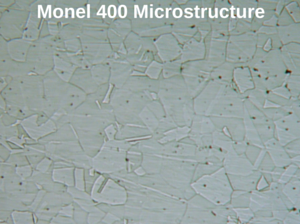
monel 400 alloy

In addition, this compound has a stellar set of mechanical properties when it comes to low temperatures. The idea here is that as long as you use it at temperatures less than – 1000 degrees F you will have no problem with it. Since the Monel Alloy 400 is low in strength in the annealed condition, a multitude of tempers are used in order to increase the overall strength and make the compound more powerful as a whole.

In what forms can you find the Monel Alloy 400?

The product comes in a variety of forms and all of these retain the properties of this compound. You can find it in bar, pipe, tube, sheet, wire, and fittings. This way you can easily integrate it into many different projects and applications.

Note: Our standard range of instrumentation products are produced from 316 Stainless Steel and are used by customers such as Sealed Air Diversey, Wales & West Utilities and the Amec Foster Wheeler Group.

Characteristics

Monel Alloy 400 offers a wide range of nice characteristics and features:

  • Alkalis resistance
  • Good mechanical properties at low temperatures
  • Sulfuric acid and hydrochloric acid resistance
  • Chloride resistance
  • Stress corrosion cracking resistance in freshwaters
  • Resists to seawater
  • Alkaline salt resistance

Chemical composition

This product has the following composition: a remainder of Nickel, Ni, 28-34% copper, 2.5% iron, 2% manganese, 0.5% silicon, 0.3% carbon and other compounds including Sulphur that are presented here in a lot smaller amounts.

Uses for Monel 400 tube fittings and valves

Monel Alloy 400 can be used in a wide range of industries and that include the chemical industry among many others. Aside from being a great Chemical plant equipment, it also helps create frames for eyeglasses, musical instruments, aerospace-related items and many others.

Since the MONEL 400 is resistant to salt water, you can easily find it in marine fixtures, fittings, pumps, valves and even piping systems created for marine applications.

In conclusion, MONEL 400 is a great alloy that can be used in a multitude of industries and applications.

We offer a wide range of high-quality products made out of this MONEL 400 alloy.

enquiries@waverleybrownall.co.uk

We offer bespoke solutions, manufacturing and supplying valves and fittings from special alloys such as Monel 400, Titanium and Super Duplex.

Filed Under: Uncategorized Tagged With: monel 400 tube fittings, monel 400 valves, monel alloy 400, special metals

June 28, 2017 By Waverley Brownall

Corrosion Concerns In Oil And Gas Production

Corrosion Concerns In Oil And Gas Production

Areas of corrosion concern and consideration within the Oil and Gas production industry:

• Pipeline pressure vessel steels for resistance to Hydrogen Induced cracking
• Application of thermal spray coatings (aluminium, zinc and other alloy composites)
• Laboratory testing of metals for resistance to sulphide stress cracking
• Preparation, installation and analysis of corrosion in oilfield operations
• Corrosion control in submerged areas of steel offshore structures (petroleum production)
• Corrosion control of offshore structures with use of protective coatings
• Bacterial growth reporting for oil and gas systems
• Atmospheric and splash concern for offshore zones
• Corrosion control in injection systems – particularly in seawater
• Corrosion control of tubular goods within oil and gas environments
• Evaluation reports concerning pipeline and pressure vessel steels

Visit NACE.org for standards and reports, including specific reports for applications not listed above.

Corrosion by category

Types of corrosion can usually be separated into three separate groups.

corrosion

1) The first group consists of corrosion types that can be seen with ordinary visual examination. These types of corrosion include pack rust, crevice, galvanic and pitting corrosion.

2) The second group includes corrosion types that may require further inspection or testing to define corrosion presence. The second group consists of corrosion such as erosion, exfoliation, fretting and cavitation.

3) The third group will require verification by microscopy, including environmental cracking, fatigue and SCC.

Corrosion resistance and product longevity

Of course, the most common control methods of controlling corrosion includes protective coatings, but even these are at risk of wearing over long periods of time.

For areas of which need longevity above most, such as offshore platforms, something with a stronger resistance is required.

Due to the nature of applications within the Oil and Gas production, one of the best corrosion control methods is within the initial material selection of the fittings, pipelines, valves and instrumentation that is going to be used.

Although no metal is completely resistant to all corrosive natures, NACE advocate that ‘materials selection is critical to preventing many types of failures’.

Looking for corrosion resistant tube, valves or fittings? Speak to our team today
enquiries@waverleybrownall.co.uk

Helpful links:

· Special Metals

· How to solve pipe fitting corrosion

· Corrosion in the Oil and Gas industry

· Corrosion control in Oil and Gas pipelines

· Corrosion in the Oil industry

· Metallurgy and Corrosion Control in Oil and Gas production

· Corrosion basics NACE international

Filed Under: Uncategorized Tagged With: corrosion, corrosion control, corrosion in oil and gas, corrosion prevention, oil and gas industry, special metals, types of corrosion

  • 1
  • 2
  • 3
  • …
  • 12
  • Next Page »
  • Duoloc Imperial & Metric Charts
  • Ringlok Imperial & Metric Charts

Call us or email us on:
+44(0)1702 600014
enquiries@waverleybrownall.co.uk

Additional Links

  • Approvals
  • Catalogues
  • Case Studies
  • Quality
  • Support

Copyright © 2026 · ·Generate Pro Theme on Genesis Framework · WordPress · Log in

We use cookies to ensure that we give you the best experience on our website. If you continue to use this site we will assume that you are happy with it.