Waverley Brownall

Our philosophy is dominated by quality.

  • Home
  • Tube Fittings
    • Ringlok Fittings
    • Duoloc Fittings
    • Stainless Steel Tube
    • Gas Release Flaps
    • Flange Fittings
  • Ball Valves
    • BV 1000 Series Ball Valves
    • 3 Way Ball Valves
    • BV 3000, 6000 Ball Valves
    • PSV8 Ball Valves & Needle Valves
    • Lockable Handle Ball Valves
    • Air Actuated Ball Valves
    • Cast 316 Ball Valves
  • Valves
    • Stainless Steel Needle Valves
    • Check Valves
    • Relief Valves
    • Strainers
    • Manifold Valves
    • Double Block & Bleed Valves
  • Pipe Fittings
    • Hose Components & Unions
    • Plugs, Bushes & Seals
    • High Pressure Precision Pipe Fittings
    • Low Pressure Cast Range of Pipe Fittings
  • Special Metals
    • Titanium
    • 6 Mo Stainless Steel
    • Monel 400
    • Inconel 625
    • Incoloy 825
    • Hastelloy C-276
  • Catalogues
  • About
    • Blog
    • Bespoke Solutions
    • Approvals
    • Case Studies
    • Quality
    • Support
    • Terms & Conditions
  • Contact Us

November 3, 2017 By Waverley Brownall

6 Alloys With Aqueous Corrosion Resistance

6 Alloys With Aqueous Corrosion Resistance

Aqueous corrosion resistance; the key to better sleep for every marine engineer!

If you’re looking for an alloy with outstanding resistance to aqueous corrosion, the below six are some of the best alloys on the market.

All alloys listed have incredible resistance to various forms of aqueous corrosion, including acids such as Sulfuric, Hydrofluoric, Nitric, Hydrochloric, salts, and seawater.

  1. INCONEL® Alloy 22

Alloy 22, also known as Nickel alloy 22 or Hastelloy C-22, this high-grade alloy offers a wide variety of corrosion resistance. Its aqueous corrosion resistance is known as a top choice for resistance at higher temperatures. This alloy is used frequently for processing nuclear fuel and, thanks to its resistance to seawater, general marine industries.

  1. INCONEL® Alloy 625

This nickel-chromium alloy offers high strength and thermal strength, resistance to oxidation and resistance in a large range of temperatures. This INCONEL alloy is known for its versatility which makes it a great choice for within a number of industries. It is known for its incredible heat-resistance, up to 815°C cryogenic temperatures. Inconel 625 has proven indispensable within the aerospace and marine industries.
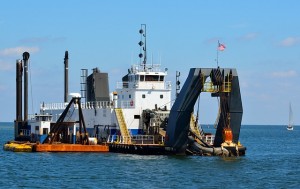
dredger boat marine industry


  1. INCONEL® Alloy 625LCF

This version of 625(LCF – Low Cycle Fatigue) is specifically designed with low cycle fatigue resistance at temperatures up to 649°C. Apart from the LCF benefits, this alloy holds properties similar to alloy 625 because of such a closely related chemical composition.

  1. INCONEL® Alloy 686

Used mostly in areas of extreme corrosion – classed as a “super alloy”, Inconel 686 provides function at high temperatures and stresses. With a content of 59% Nickel, 19-23% Chromium and up to 17% Molybdenum on average, it can handle up to 104700 psi (tensile strength.)

  1. INCONEL® Alloy G-3

Alloy G-3 is a nickel-chromium-iron alloy that has good weldability and resistances to intergranular corrosion. It is commonly used for dealing with phosphoric and sulfuric acids in particular. Another alloy developed by Special Metals Corporation, it has a low carbon content and high resistance to atmospheric and acid corrosion. It is machinable with use of high-speed tools at a continuous pace to avoid work-hardening.

  1. INCOLOY® Alloy 825

    Alloy 825, (along with Inconel 625) is one of the most popular choices of alloy for resisting corrosive substances. Most Incoloy’s in the 800 series, such as 800, 800H and 800HT are known for their incredible heat resistance, especially in treatment plants, pipelines, and tubing. Incoloy 825 is just as impressive, giving fantastic overall resistances, with high strength and resistance against stress-cracking, pitting and intergranular corrosion.

    We recommend 825 for customers requiring a material that lives up to the “super alloy” name, particularly within petrochemical, oil and gas, pollution and processing industries.

pneumatic fittings


Waverley Brownall manufacture fittings, components and valves from INCONEL® and INCOLOY® Special Metals materials for engineers within the UK and around the world.


Filed Under: Uncategorized Tagged With: aqueous corrosion, corrosion control, corrosion resistance, corrosion resistant alloys

June 28, 2017 By Waverley Brownall

Corrosion Concerns In Oil And Gas Production

Corrosion Concerns In Oil And Gas Production

Areas of corrosion concern and consideration within the Oil and Gas production industry:

• Pipeline pressure vessel steels for resistance to Hydrogen Induced cracking
• Application of thermal spray coatings (aluminium, zinc and other alloy composites)
• Laboratory testing of metals for resistance to sulphide stress cracking
• Preparation, installation and analysis of corrosion in oilfield operations
• Corrosion control in submerged areas of steel offshore structures (petroleum production)
• Corrosion control of offshore structures with use of protective coatings
• Bacterial growth reporting for oil and gas systems
• Atmospheric and splash concern for offshore zones
• Corrosion control in injection systems – particularly in seawater
• Corrosion control of tubular goods within oil and gas environments
• Evaluation reports concerning pipeline and pressure vessel steels

Visit NACE.org for standards and reports, including specific reports for applications not listed above.

Corrosion by category

Types of corrosion can usually be separated into three separate groups.

corrosion

1) The first group consists of corrosion types that can be seen with ordinary visual examination. These types of corrosion include pack rust, crevice, galvanic and pitting corrosion.

2) The second group includes corrosion types that may require further inspection or testing to define corrosion presence. The second group consists of corrosion such as erosion, exfoliation, fretting and cavitation.

3) The third group will require verification by microscopy, including environmental cracking, fatigue and SCC.

Corrosion resistance and product longevity

Of course, the most common control methods of controlling corrosion includes protective coatings, but even these are at risk of wearing over long periods of time.

For areas of which need longevity above most, such as offshore platforms, something with a stronger resistance is required.

Due to the nature of applications within the Oil and Gas production, one of the best corrosion control methods is within the initial material selection of the fittings, pipelines, valves and instrumentation that is going to be used.

Although no metal is completely resistant to all corrosive natures, NACE advocate that ‘materials selection is critical to preventing many types of failures’.

Looking for corrosion resistant tube, valves or fittings? Speak to our team today
enquiries@waverleybrownall.co.uk

Helpful links:

· Special Metals

· How to solve pipe fitting corrosion

· Corrosion in the Oil and Gas industry

· Corrosion control in Oil and Gas pipelines

· Corrosion in the Oil industry

· Metallurgy and Corrosion Control in Oil and Gas production

· Corrosion basics NACE international

Filed Under: Uncategorized Tagged With: corrosion, corrosion control, corrosion in oil and gas, corrosion prevention, oil and gas industry, special metals, types of corrosion

  • Duoloc Imperial & Metric Charts
  • Ringlok Imperial & Metric Charts

Call us or email us on:
+44(0)1702 600014
enquiries@waverleybrownall.co.uk

Additional Links

  • Approvals
  • Catalogues
  • Case Studies
  • Quality
  • Support

Copyright © 2026 · ·Generate Pro Theme on Genesis Framework · WordPress · Log in

We use cookies to ensure that we give you the best experience on our website. If you continue to use this site we will assume that you are happy with it.