
Waverley Brownall

Our philosophy is dominated by quality.

  • Home
  • Tube Fittings
    • Ringlok Fittings
    • Duoloc Fittings
    • Stainless Steel Tube
    • Gas Release Flaps
    • Flange Fittings
  • Ball Valves
    • BV 1000 Series Ball Valves
    • 3 Way Ball Valves
    • BV 3000, 6000 Ball Valves
    • PSV8 Ball Valves & Needle Valves
    • Lockable Handle Ball Valves
    • Air Actuated Ball Valves
    • Cast 316 Ball Valves
  • Valves
    • Stainless Steel Needle Valves
    • Check Valves
    • Relief Valves
    • Strainers
    • Manifold Valves
    • Double Block & Bleed Valves
  • Pipe Fittings
    • Hose Components & Unions
    • Plugs, Bushes & Seals
    • High Pressure Precision Pipe Fittings
    • Low Pressure Cast Range of Pipe Fittings
  • Special Metals
    • Titanium
    • 6 Mo Stainless Steel
    • Monel 400
    • Inconel 625
    • Incoloy 825
    • Hastelloy C-276
  • Catalogues
  • About
    • Blog
    • Bespoke Solutions
    • Approvals
    • Case Studies
    • Quality
    • Support
    • Terms & Conditions
  • Contact Us

April 3, 2017 By Waverley Brownall

How To Solve Pipe Fitting Corrosion

How To Solve Pipe Fitting Corrosion

Metal corrosion has an annual global cost of $2.5 trillion!

The industries affected include Oil and Gas, offshore, marine, nuclear energy, chemical production and more.

Corrosion causes risk of costly downtime. Components manufactured from basic steel materials increase maintenance difficulties.

corroded metal surface

Corrosion, such as pitting, surface and uniform can lead to cracks, metal deformity and severe weakness.

The solution for companies that work within highly corrosive environments is to invest in super-alloy components.

Super alloys are a group of metals that hold superior corrosion resistance, strength and hardness.

Where standard metals for pipe and tube components fail, super alloys will thrive, significantly reducing the risk of corrosion failureover a long period of time.

Benefits Of Investing In Corrosion Resistant Fittings

  • Reduce maintenance costs
  • Save money long-term through smart investment
  • Eliminate risk of corrosion failure
  • Increase longevity
  •  Boost productivity and safety
  •  Resist oxidisation
  •  Resist corrosion
  • Improve strength at high temperatures

Pipe Fitting Corrosion
Tubing, Valves and Other

Corrosion appears in common apparatuses of these industries, such as control valves, instrumentation tubing and pipe fittings.

When tubing begins to corrode, the interior of a tube can form blockages, it can also, overtime cause holes to appear. Leakages from tubing and pipe are potentially life-threatening, especially when the material within the tube is crude oils, gases or acids.
1
corrosion resistant components

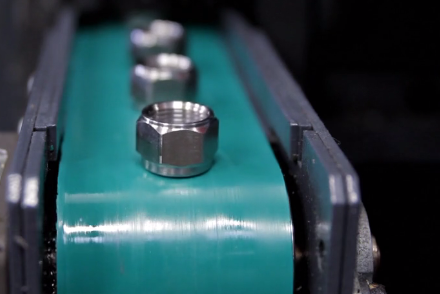
Corrosion on compression fittings, such as elbow turns, end caps and adapters, can cause rigidness and serious strength reduction. It is essential that pipe fittings and tube are required to withstand corrosive inner materials at both high temperatures and pressures – which is why high-performance alloys, such as Incoloy 825 are used for manufacture.

1
manufacturing corrosion resistant pipe fittings

Why Anti-Corrosion Coatings
Are A Disappointment

It is common practice to invest in this solution, rather than use protective coatings on already existing inferior materials such as copper or basic steels.

Corrosion resistant coatings are used as a barrier between a fitting and the hazardous material or environment, not as a permanent solution. This is due to the well-known failure of coatings, which can be caused by chemical reactions between the paint and metallic surface or blistering and flaking several months into usage.

Coatings may be ideal for a short-term solution, but may not be readily available to tackle higher pressures and temperatures as a super alloy could. The coating is guaranteed to wear down gradually after usage, whereas pipe and fittings manufactured from high-quality metals will last for over 15 years.

1
1

Are You Ready For Your Solution?

We manufacture a huge range of fittings and valves in corrosion resistant superalloys.

Speak to our sales team today to discuss your needs on enquiries@waverleybrownall.co.uk

Filed Under: Uncategorized

March 27, 2017 By Waverley Brownall

Compression Fitting Identification

Compression Fitting Identification

Installations with tube, valves and fittings can last up to 15 or 20 years, which leaves a long stretch between replacement or updates.

Here is our guide on correctly identifying compression fittings, primarily for within the Waverley Brownall Ringlok and Duoloc range.

The Importance of Compression Fitting Identification

tube fitting cast code

Engineers who check these systems in order to update or maintain it will need to correctly identify the compression fittings used within the system. It is vital that the fitting is made from the same material to ensure consistency and efficiency.

The areas for concern are: material, size, thread and manufacturer.

Key Signs Of Positive Identification

It is important to remember that large brand manufacturers of compression fittings such as Parker, Waverley Brownall, Hoke and Swagelok all have clear identification marks imprinted onto their products.

This is to avoid the dangers of interchangeability, as well as to highlight an excellently designed and capable fitting. The random mixing of fittings and components, including nut and ferrule, is not recommended under any circumstance.

Usually, the ferrule inside a fitting will not give you any means of identification. It is much more common to find markings on the nut of the fitting or at the body. This will include a cast code to enable material traceability.

Waverley Brownall fittings include a three-letter cast code on all compression nuts as standard. For the collar on the body or nut, the metric range is indicated (MM.)

Bodies of a tube fitting will also come marked with the full 3 identification tags – logo or initial marking, metric range and three-letter cast code.

See the chart below for WB, Swagelok, HOKE International
and Parker Hannifin tube fitting identification:

2020-05-13_14-36-12

Other Waverley Brownall logos may include the following:

waverley brownall compression fitting identification

See our tube fitting diagrams below, indicating the location of identification marks.

ringlok tee fitting identification diagram

For our full identification booklet, contact us at technical@waverleybrownall.co.uk

Our full booklet will be able to guide you in identification for Waverley Brownall compression fittings, focusing on single and twin ferrule ranges – imperial and metric.

A Helping Hand

Many of the larger brand manufacturers will gladly either positively or negatively identify a tube fitting for you.

A brief product description of size, fitting type and a photograph will suffice in most cases, though any other relevant information is helpful.

If you are unsure of the fittings you are looking to purchase next for either a new batch on an existing system or replacement, get in touch with us today for free advice.

Helpful links:

    • ​5 Ways to Identify a Fittings Thread – World Wide Metric Blog
    • Four Easy Steps to Identify Hydraulic Threads – Parker Hannifin
    • Fitting Identification Guide – Fluid Power Products

7 Common Compression Fitting Problems

This blog post deals with the problem areas which are most likely to be encountered during installation and maintenance of small[…]
Read More

25mm Compression Fittings in 316 Stainless Steel

25mm tube OD sized fittings with a choice of thread type. Stainless steel pipe and tube fittings for gas and[…]
Read More

Where Will Your Tube Fittings Be 5 Years From Now?

Some of the biggest tube fitting manufacturers give a set life-expectancy of their fittings and valves. This is a factor that is[…]
Read More

Blanking Ends and Blanking Plugs

For tube and instrumentation, Waverley Brownall offers a range of accessories that may be used in your application. Stainless steel[…]
Read More

Compression Couplings For Tubing And Pipe

Compression couplings for tubing and pipe are used often in piping and plumbing applications. Usually for short lengths of pipe or[…]
Read More

Tube Fittings Material Selection

Tube fittings material selection can be a tricky process, where cost and availability are at the forefront for many industries. Quick[…]
Read More

Filed Under: Uncategorized Tagged With: compression fitting identification, identifying pipe fittings, identifying tube fittings, tube fitting identification, waverley brownall fittings

March 20, 2017 By Waverley Brownall

Tube Bending Tips For Duoloc Fittings

Tube Bending Tips For Duoloc Fittings

Tube bending may be required as a form of metal forming for tubular installation. Here are some of our top tips for ensuring a safe and correct bending procedure.

Tube Bending Tips

tube bending diagram

Always bend tube prior to insertion in connectors and ensure adequate length of straight tube to fully enter the connector abutment.

These lengths should be added to the radius of tube bend as recommended by the tube bender manufacturer.

When using tube benders always follow the manufacturers instructions for the make of tube bender in use at the time.

The radius of the bend is as recommended by the tube bender manufacturer.

Recommended Bend Lengths

The minimum straight length of tube before a bend is shown in the table below:

Tube OD (inches) 1/4″ 5/6″ 3/8″ 1/2″ 5/8″ 3/4″ 1″
Tube OD (mm) 6mm 8mm 10mm 12mm 16mm 20mm 25mm
Straight Length (inches) 0.82″ 0.88″ 0.94″ 1.19″ 1.25″ 1.25″ 1.5″
Straight Length (mm) 20.8mm 22.3mm 23.8mm 30.2mm 31.7mm 31.7mm 39.3mm

Tube Bending Problems

The bending of tube adjacent to compression connectors requires care as sealing problems can result. These can be caused by:

a. linear score marks created by worn bending tool formers.

b. tube may be deformed on section.

c.over/under bent tube causing misalignment and excessive stresses.

d. insufficient straight length of tube before a bend.

When Using Tube

  • Do not crush tube in vice jaws, use either soft jaws or aluminium tube jaws
  • Do not force tube that is not round into tube or pipe fittings
  • Do not use damaged tube, cut it back to where the tube is not damaged before use

Helpful articles:

  • ​What is tube bending? WISEGEEK
  • How To Achieve The Perfect Bend – The Fabricator
inShare0

*Information produced from Waverley Brownall official training manual: Installation and Maintenance of Small Bore Pipework for Duoloc single ferrule fittings. Not to be reproduced, re-written or copied to other websites under the copyright material act.

Filed Under: Uncategorized Tagged With: duoloc compression fittings, stainless steel tube, stainless steel tubing, tube bend suppliers uk, tube bending, tube bending guide, tube bending tips

  • « Previous Page
  • 1
  • …
  • 5
  • 6
  • 7
  • 8
  • 9
  • …
  • 44
  • Next Page »
  • Duoloc Imperial & Metric Charts
  • Ringlok Imperial & Metric Charts

Call us or email us on:
+44(0)1702 600014
enquiries@waverleybrownall.co.uk

Additional Links

  • Approvals
  • Catalogues
  • Case Studies
  • Quality
  • Support

Copyright © 2026 · ·Generate Pro Theme on Genesis Framework · WordPress · Log in

We use cookies to ensure that we give you the best experience on our website. If you continue to use this site we will assume that you are happy with it.